Available now

Just say it. Your website takes care of it.

Write blog posts, build landing pages, upload images, create categories, answer comments, change prices. You tell your AI assistant in plain sentences what should happen, and WPAgently carries it out in your WordPress site.

You do not write a line of code. From WordPress 7.0 onwards, you can work inside the WordPress chat with a configured AI provider. Alternatively, connect an external AI app such as Claude Code or Codex. You continue to pay your AI provider directly.

Requires PHP 8.1+ and WordPress 6.9+

Claude Code / WPAgently
Prompt

“Write a post about morning routines and save it as a draft.”

create-post-from-markdown

Markdown is converted into native blocks server-side

get-seo-meta

Plugin=rankmath title description

render-check

6 blocks, freeform: 0, words: 85

Result

Post #105970 sits in your WordPress as a draft, structurally checked and read back. SEO changes stay manual.

Abridged real run. The current catalog counts live further down in the catalog section.

Works with the AI access you already have

Claude Code Codex ChatGPT Claude.ai Claude Desktop Cursor and more

What you can do

Your WordPress site, on request.

Most of what you currently log in and click for, you now simply tell your assistant. Eight examples from a normal website day.

Posts

“Write a post about morning routines and save it as a draft.”

The finished post lands in your WordPress, with headings, a featured image and a category. SEO meta is read provider-neutrally. Make changes manually in the plugin.

Landing pages

“Build me a sales page for my new group program.”

Twelve ready-made building blocks turn into a complete page. WPAgently picks up colors and fonts from your theme.

Updates

“Change the course price from 490 to 590 euros across all pages.”

You get a preview first. WPAgently changes at most 100 pages. An automatic undo is only possible with a retained snapshot, for at most seven days, and only if the affected content has not changed afterwards. See how undo works.

Images and structure

“Upload this image to the media library and give it suitable alt text.”

The media library, alt text, and featured images are all part of the job, not just the text. You can set a category when creating a new post. Change existing assignments manually in WordPress.

Comments

“Go through the new comments, mark the spam and answer the real questions.”

Marking spam, approving and replying run through your assistant too. That is one more thing you no longer log in for.

SEO

“Show me the SEO titles of my last ten posts and suggest concrete improvements.”

WPAgently reads SEO data through the native paths of Rank Math, Yoast, AIOSEO, and SEOPress. You then apply suggestions yourself in the respective SEO plugin. Rank Math redirects can be read and managed through their separate guarded path.

WooCommerce

“Put the new workbook in the shop as a product for 29 euros.”

WooCommerce products are part of the recommended content profile. Order data stays separate and needs its own approval.

Cleanup

“Show me the 2024 drafts so I can decide which ones to clear up.”

Matches are read first. You then move them to the trash or restore them yourself in WordPress.

Catalog

Every action counted, verified and documented.

317 actions in the recommended content profile
414 actions the Companion plugin ships with in total
26 extra actions in the separate developer plugin, off by default
440 actions in total, each with a checked input and result

Here is how the numbers fit together. The Companion ships 414 actions. The recommended content profile switches 317 of them on. Which of them your site can use also depends on its role, licence, and installed plugins or themes. Some visible actions are deliberately manual-only. They give you the checked next step, but do not change anything remotely. The rest stay off until you enable them. Power is the separate developer plugin, off by default, with 26 more actions, which makes 440 in total. Every one of them has a typed schema, so its input and its result are checked instead of guessed.

Compatibility

Works with what already runs on your site.

WPAgently reads and writes through native plugin interfaces where the individual Ability explicitly proves that scope. SEO meta and lifecycle writers are currently manual-only. Every card states the verified scope, nothing more.

WordPress

Native core blocks, posts, pages, media, Site Editor templates

WooCommerce

Products plus separately gated order data

Rank Math

Read SEO data, redirects and bounded schemas through separate paths, with read-back

Yoast SEO

Read SEO data, cornerstone and page types through separate confirmed paths

AIOSEO

Read SEO data, MariaDB-only runtime evidence; changes manual

SEOPress

Read SEO data and simple local redirects

Elementor

Documents, widgets, Global Classes and the Live Editor through the public API

Beaver Builder

Layouts, safe modules and revisions through the model API

Kadence Blocks

Advanced Heading, Spacer and Progress Bar, schema-checked

GenerateBlocks

Query and pagination attributes, deliberately without a text path

Spectra

Block library, popups, dynamic button text and bounded block attributes

ACF

Field values for posts, users, terms, comments and options

Meta Box

Field groups, field values, relationships and settings-page definitions

Pods

Content models, field values and bounded ACT records

CPT UI

Post type and taxonomy definitions, conflict-protected

ACPT

Meta groups, supported field values and bounded model migration through native paths

The scope per plugin is deliberately bounded and documented per action. Whatever sits outside the verified paths stays read-only or fails visibly. For themes, WPAgently works with the active (child) theme and the Site Editor templates. All names and logos belong to their respective owners and appear here only to state compatibility.

How it works

Ready in three steps.

You need no technical background. Work inside WordPress or connect an external AI app.

Install the plugin

You download the WPAgently plugin and install it like any other plugin.

Connect your assistant

Open WPAgently > Connect agent and click “Create dedicated agent user”. Then make one choice: work inside WordPress or connect your AI app.

Get going

From then on you say in plain sentences what your website needs. You review and approve.

Open the quickstart

What you get

Everything you need to start.

Every plan contains the full feature set. The plans differ only in the number of websites.

The WordPress plugin with every action

It installs like any other plugin and makes your website reachable for your assistant.

Ready-made templates for Claude Code and Codex

They tell your assistant from the start how to handle WordPress.

A setup guide and updates

A step-by-step setup in plain language, plus every update during your subscription period.

Your content stays yours

Your texts and images do not travel through WPAgently servers.

How that works

You pay Anthropic or OpenAI directly, and your assistant runs under your own contract. WPAgently does not process your content on its own servers, and the plugin does not send your WordPress credentials to us.

Safety

Safe by default. And honest about the limits.

Letting an AI touch your live site is only a good idea if something checks afterwards. That is exactly what the hardened write paths do, without you configuring the check yourself.

Your bot is an Editor, never an Administrator

It may work on content, but not on menus, settings, plugins or themes.

How that is enforced

A preflight check aborts every pipeline as soon as the authenticated account carries the administrator role. Menus, settings, plugins and themes stay locked either way.

New content starts as a draft

Nothing goes live unasked. You read it over and approve it.

How that is enforced

--publish and similar CLI switches express only the requested target state. The current set-post-status path returns HTTP 409 with manual_only without changing the status. Nothing goes live unasked.

Changed values are read back

WPAgently does not trust the success message, it goes and looks afterwards.

How that is enforced

The remote write paths that are explicitly enabled read changed values back out of your website afterwards. set-seo-meta, set-seo-settings and the lifecycle writers currently end first with HTTP 409 and manual_only.

A backup before deeper changes

Without a suitable backup the operation does not start at all.

How that is enforced

Before the CLI reaches deeper, it requires a suitable backup. Without one the operation does not start.

Your editor keeps working

The agent never sends raw block markup into your site.

How that is enforced

Content is handed over as Markdown or as a declarative section list, and your server turns it into native Gutenberg blocks. Before saving, the result is parsed and rejected if a single classic-editor block came out of it.

Images come from public addresses only

Your server is not talked into fetching from its own network.

How that is enforced

A media URL has to be public http(s). The address is resolved first and refused when it points at loopback, link-local, private or cloud-metadata ranges, and the check is repeated after redirects instead of trusting the first answer.

Uploads are checked, not trusted

A file has to be what it claims to be before it is added to your library. If the final check fails after it is saved, the attachment remains for manual review.

How that is enforced

The upload runs through a single-use credential that expires after five minutes. The server streams to a temporary file, applies the smaller of your WordPress limit and 64 MiB, checks the type against WordPress's own allowed mapping and against the actual content, and then reads the saved attachment back.

The optional developer mode is not a safe mode

It is completely off by default, and anyone who switches it on takes on that risk deliberately.

What applies there and what does not

If you really want to go under the hood (or have someone who does that for you), you can unlock the separate developer mode. It is completely off by default. Before deeper write operations, the CLI requires a suitable backup. Remote database backups contain a versioned restore schema. Tables, views, and triggers that cannot be restored completely are rejected before export. Plugin and theme ZIPs can be inspected within strict bounds, but WPAgently does not install, update, overwrite, or activate them. Actual installation remains a deliberate administrator action in WordPress. Where an individual bounded file or database operation explicitly supports crash recovery, it can be rolled back automatically after a detected crash. This promise explicitly does not apply to arbitrary PHP code.

Comparisons

How WPAgently fits in.

There are several ways to connect an AI agent to WordPress. The right one depends on how much control over the path of your data you need.

DimensionWPAgentlyWP MCP AdapterWordPress.com MCP
Verified writes with read-back
Draft by default, status changes manual
Editor role enforced, an admin account aborts
SEO meta read, changes manual
Page-builder write paths
Backup and restore
Agent skills for articles and landing pages
Abilities API
Self-hosted WordPress
Connection pathMCP endpoint on your own websiteREST endpoint on your website or locally via WP-CLI, a developer frameworkHosted remote server at WordPress.com
SetupInstall the Companion plugin, connect Claude Code or Codex via OAuthRegister your own abilities in codeAdd the URL, sign in with your WordPress.com account
PriceFree Companion with 34 abilities, full access from $49 per year by number of websitesFree, GPLFree

Abridged side-by-side, last checked 21 August 2026 against the official documentation. WPAgently does not compete with the official building blocks. The Companion bundles this exact MCP Adapter together with the Abilities API and builds the verification layer on top. WordPress.com MCP is the hosted server for sites on WordPress.com. “Not included” means the official documentation does not describe it there. The four vendor comparisons with all details, prices and sources live on their own pages.

Who is behind it

Built by someone who works the way you do.

I am Finn Hillebrandt, an SEO coach and blogger since 2011. Since mid-2025, I have built real apps, scripts and websites with Claude Code, although I am not a developer. WPAgently is built with Claude Code as well and gives Claude Code and Codex a bounded, verified way to work in WordPress.

I write about SEO and blogging at Blogmojo, and about working with AI at Gradually AI. Since mid-2025, I have spent more than 800 practical hours with Claude Code and used it to build hundreds of real apps, scripts, and websites.

I develop and operate it largely on my own in Germany. If you have a question, write to hallo@wpagently.com. The person who built it answers.

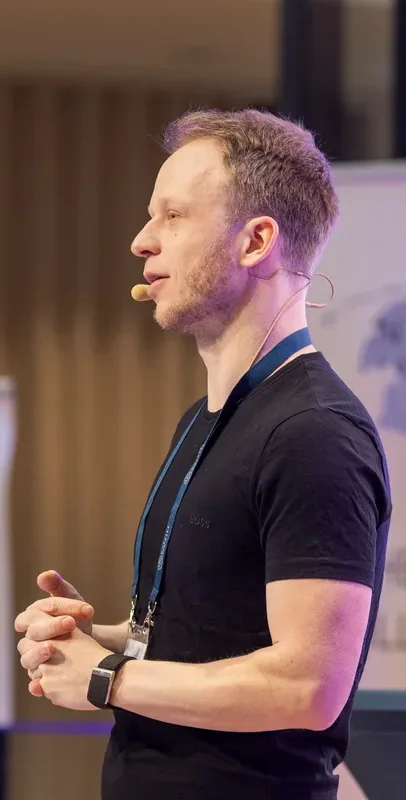
Finn Hillebrandt speaking at a conference

Pricing

Free to start. Paid for the full breadth.

Free runs locally on unlimited websites and does not count calls. The three paid plans contain the full feature set and differ only by number of websites.

Free

$0

forever

Unlimited websites

The Free tier is permanently licence-free and comes from the same signed Companion download.

  • 34 unlimited core abilities for content, taxonomies, media, comments, SEO, and verification
  • Local execution without a WPAgently proxy
  • Signed Companion updates
  • Unlimited websites and calls
  • Paid functionality stays closed and is included only with annual licences
Download Free

No account, no checkout, and no licence key required. No credit card needed.

Solo

$49

per year

1 website

For your own website, for example your coaching, course or blog site.

  • 414 Companion actions, including 317 in the recommended content profile
  • Plugin, templates and a step-by-step guide
  • Backup, updates and developer mode included
  • 1 website
Buy Solo

Immediate access through Polar

Pro

$99

per year

5 websites

For several of your own projects or a small team.

  • 414 Companion actions, including 317 in the recommended content profile
  • Plugin, templates and a step-by-step guide
  • Backup, updates and developer mode included
  • Up to 5 websites
Buy Pro

Immediate access through Polar

Agency

$149

per year

25 websites

For agencies and service providers with client websites.

  • 414 Companion actions, including 317 in the recommended content profile
  • Plugin, templates and a step-by-step guide
  • Backup, updates and developer mode included
  • Up to 25 websites
Buy Agency

Immediate access through Polar

WPAgently is now available. Polar processes payment and taxes as merchant of record. Your licence key and downloads are available in the Polar customer portal after purchase.

These prices apply to new subscriptions. Existing subscriptions remain unchanged.

FAQ

Frequent questions.

Do I need my own AI access?

Yes. WPAgently is not the AI itself. From WordPress 7.0 onwards, configure your own AI provider for the chat in the backend. Alternatively, connect an external AI app such as Claude Code or Codex. You pay the provider directly.

Do I need to know how to code?

No. You only need to sign in to WordPress and upload a plugin. The quickstart shows every other click. The chat inside WordPress requires no terminal.

What do I need to get started?

For everyone, you need WordPress 6.9+ and PHP 8.1+. For the chat inside WordPress, you need WordPress 7.0+ and a configured AI provider. For an external AI app, you need HTTPS. Under Settings > Permalinks, “Plain” must not be selected.

If your hosting uses an older PHP version, check for a hosting upgrade before downloading. WordPress correctly blocks the ZIP upload. Free works without Polar. With Paid, Polar provides your licence key and downloads.

Which assistants are supported?

The direct connection is comprehensively documented for Claude Code and Codex. ChatGPT and Claude.ai connect through guided browser OAuth. Depending on the ChatGPT plan and workspace permissions, different MCP tools are available. The current setup guide explains the requirements. Fallback configurations also exist for Claude Desktop, Cursor, Windsurf, Visual Studio Code, Gemini CLI, OpenCode, Cline, Roo Code, Kilo Code, Zed, GitHub Copilot, Amazon Q and Antigravity.

From WordPress 7.0 onwards you can alternatively chat directly in the backend, click a visible element in the script-isolated preview and approve every proposed change individually.

Can the AI break my website?

Your assistant uses a constrained role in the Companion core, new content starts as a draft, hardened write paths read changed values back after saving, and the CLI workflow requires a suitable backup before deeper changes. WPAgently still does not promise absolute safety. Verification can surface failures, but it cannot prevent every possible effect.

Does it work with my page builder?

In normal use WPAgently writes natively to Gutenberg and targeted schema-bound attributes of server-registered dynamic Spectra blocks. It also has two version-bound Spectra 2.20.1 paths for three responsive alignments and up to three classic hex colors on one `uagb/advanced-heading`, plus forty-six deliberately narrow provider attributes: five GenerateBlocks attributes covering four Query and pagination attributes including two canonical wrapper tags plus one canonical plain-text wrapper tag, thirty Kadence Advanced Heading attributes including responsive pixel sizes, line heights, letter spacing, four bounded pixel margins, and classic icon and hover-icon colors plus icon side and vertical icon alignment for an existing provider icon, four responsive Kadence Spacer attributes, and seven bounded values, widths, and colors on a simple line Progress Bar, each checked against the live server schema. Other GenerateBlocks and Kadence attributes remain read-only. Practically verified Elementor actions administer documents, widgets, controls, subtrees, and global design tokens through its public API, with the write action for global tokens limited to the Design profile. The approval-gated Live Editor can open the real Elementor editor and execute only those existing verified Elementor actions after individual confirmation and a fresh conflict-hash check. Practically verified Beaver Builder actions administer layouts, safe modules, bounded nested column groups, local nodes, and revisions through its model API. Conflict protection, revisions, complete read-back, frontend verification, and verified rollback apply only where the respective builder action explicitly provides them. If a provider read-back is uncertain, the action reports recovery_required instead and deliberately makes no automatic follow-up mutation. Raw HTML and shortcode modules, unfiltered legacy widgets, and global or linked Beaver nodes remain blocked. Static Spectra blocks registered only in JavaScript remain read-only through these write paths, except for its three responsive alignments and classic heading, description, and optional existing separator colors on Spectra 2.20.1. Breakdance, Oxygen, Bricks, and WPBakery are detected, but WPAgently does not blindly rewrite their proprietary data. Bricks, Breakdance, and Oxygen are not yet practically certified with licensed test artifacts.

What is the difference between Companion and Power?

Companion is the plugin for everyday content work and is always installed. Power is a separate plugin for the developer and staging mode, with file, database and PHP access behind several dedicated switches, completely off by default. Companion loads no Power code, and a panic switch can deactivate Power at any time.

Do my content or credentials end up on WPAgently servers?

No. Your assistant talks directly to your website's MCP endpoint. Your texts and images are not processed through WPAgently servers. You choose and pay your AI provider directly; its data flow is governed by your contract. The plugin does not send us WordPress credentials. With Paid, it validates the licence and site binding directly with Polar; plugin updates read static data from wpagently.com. Neither path transfers WordPress content or credentials.

How does the licence work?

Every plan is an annual subscription through Polar as merchant of record. You activate the licence key in Companion, and the number of websites depends on the plan. You manage a regular cancellation in the Polar customer portal. If a statutory or manual termination is required after the first contract year, support coordinates the process.

Does WPAgently work with my theme?

For new posts and pages the theme does not matter, create-post-from-markdown writes native blocks there. A full rewrite of an existing article remains manual. Bounded text changes are possible through search and replace. Landing-page blocks pick up colors and fonts from your theme. Direct theme files are written only into the active (child) theme and only as .html, .json or .css, with protection against path tricks.

What does WPAgently cost and how do I buy?

Free costs $0 forever and includes 34 core abilities without call limits on unlimited websites. The annual subscriptions unlock all 414 Companion abilities, including 317 in the recommended content profile, plus Power, backup, restore, CLI, and Skills. Solo (1 website) costs $49 per year, Pro (5 websites) $99 per year and Agency (25 websites) $149 per year.

Yes. Choose the plan that fits in the pricing section. After purchase, Polar provides your licence key and the current downloads in the customer portal. You only need the main plugin to get started.